Is balancing sometimes difficult for you?
Or feel a bit light-headed if you have to wait at a traffic junction with an acute angle, looking in one direction for a long time while you wait for the flow of cars to give you enough space to emerge?
Your neck is key.
As we get older, the joints in our neck can get stiffer and stiffer, and the muscles get tighter and tighter until they forget how to relax.
Maybe your neck makes ‘gravel pit’ noises when you turn it from one side to another.
There’s probably some ‘rising damp’ and ‘wear and tear’.
*
Your neck has lots of short postural muscles – the ones that do the small movements that help us keep level and straight and upright.
Between these muscles and the balance organs in your middle and inner ears, there are lots of feedback loops.
These loops help us to know where we are in space and in relation to other objects, and how we are oriented:–
are we vertical or horizontal;
leaning over the chest freezer or reaching up to clean the windows?
When the neck muscles and joints get too stiff, this stiffness in turn interferes with these feed-back loops, and your balance can suffer.
*
When I see my older patients, they often have stiff aching necks, and the range of movement that they can turn their head becomes noticeably smaller.
Alongside osteopathic treatment, exercise is key!
Gently and SLOWLY move your head –
sideways, as you drop your ear to that shoulder, and the other side;
or turning your head to one shoulder, and to the other.
*
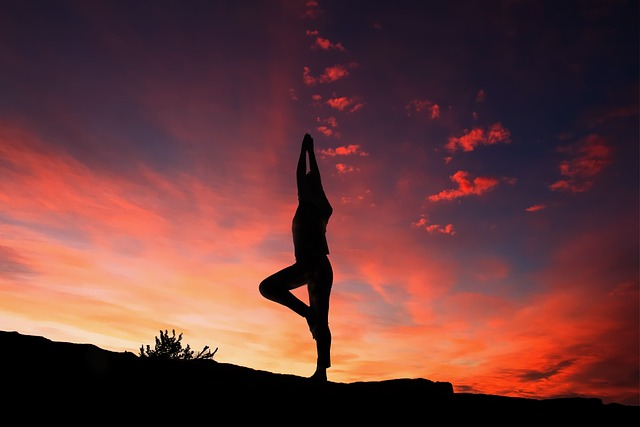
Also key are balance exercises – simply raise one foot slightly off the ground, so that you are standing on the other foot.
Yes, you will wobble!
Your standing ankle will be working hard, doing plenty of micro movements to keep you vertical.
After a few moments, you can swap feet and do the other way round.
You may find that one foot is better at balancing than the other – you need to work on the one that is less good.
And then maybe you can progress to a bigger foot lift – counterbalance by raising the opposite arm out, in the opposite direction.
This can be quite fun if you put some slow dreamy music on, and imagine that you are doing a spacewalk.
Or, time yourself: – how long can you stay on one leg, before you need to swap feet?
And with practice, you will get better.
*
We can learn new skills at any age, it’s good for your brain to try out new stuff.
Like learning Tai Chi, or going to dance classes
Research has shown that how well we balance can be a measure of how healthily we age – even more reason to make a start, however old you are now.
*
And of course, if I can help with relieving your pain, just give me a shout and let’s book you in for a session soon. You’re welcome to see me at my clinics in Baldock, SG7 or Bromley, BR1.