
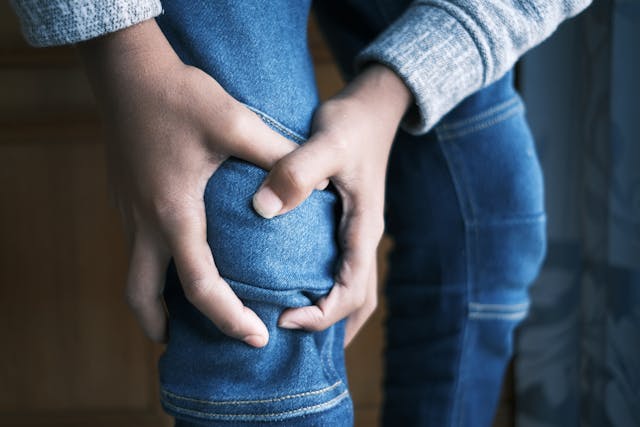
Lately I have mentioned alternating heat and cold to several patients, so here is a useful reminder of how to do ‘Hot and Cold’.
You need:
Cold: a bag of frozen peas (or similar), wrapped up in a pillowcase [this is to prevent freeze burns] – and ideally also an insulated bag to keep it cold.
Hot: a hot hot-water bottle, in a cover [likewise, to prevent burns] – and ideally a separate insulated bag to keep it hot
(or use a small electric heat pad on maximum, that stays hot).
Where you need to be:
This depends on which bit of your body you are wanting to help:
eg for a hip, or a rib, sit in an armchair, or at one end of the sofa, so that you can tuck the hot or cold item between you and the arm of the chair/sofa
For a lower back ache: sit in a comfortable chair with the cold/hot pad tucked behind you like a cushion
For a knee or ankle – sit with your leg up, whether on your sofa, or propped up on your bed.
How to do it
Have both the cold and the hot close to hand, with their respective insulated bags if using.
Note: You always start and end with the Cold
So that five times would be:
Cold – Hot – Cold – Hot – Cold.
So:
Remove the Cold pack (still in its pillowcase) from the insulated bag.
Apply the Cold pack to the part of you that is suffering.
Leave it there for between 1 and 2 minutes
Return the cold pack to its insulated bag.
Apply the Hot pack to the part of you that is suffering.
Leave it there for between 1 and 2 minutes.
Return the Hot pack to its insulated bag and
Apply the Cold pack to the part of you that is suffering.
Leave it there for between 1 and 2 minutes
Return the cold pack to its insulated bag.
And repeat the Hot and the Cold once more
= 5 times: Cold – Hot – Cold – Hot – Cold.
This will really get the blood and the circulation going, which will help not only bring fresh blood into the area, but also take away any waste products. These may in turn be adding to your pain.
Another strategy to try
If you are a shower person (as opposed to a bath person), then after your normal temperature shower, turn your shower to cold and blast it onto the painful area. If you can then alternate between hot water and cold water, say for 20-30 seconds at a time – and again, always ending with Cold, this will have a similar effect, without the palaver of the hot and cold packs.
From experience, having tried both:
The focussed cold, or hot, is more effective – but it is more faff …
Q: when to use cold and when to use heat and when to use both?
The familiar advice with fresh injuries is to do RICE: rest, ice, compression, elevation. However:
- Research has shown that when an injury is new, our body actually needs some inflammation to help the healing process. So wait with ice until the following day.
- If in the following days, you are aware of a throbbing pain, that shows that the inflammation is persisting, and some ice can be soothing.
- If no throbbing, and the pain feels muscular, then warmth can help to relax your tight muscles. Also take some magnesium supplement, which helps the muscle tension to ease.
- If the pain is still with you a week or two later, that’s the time for the alternating hot and cold, to get the healing process back on track.
Let me know how you get on!
If you would like me to help alleviate your pain and improve mobility, please book an appointment at my clinics in Baldock, SG7 or Bromley, BR1 (near Downham, SE6).