When our body is really aching, what can we practically DO to give ourselves Tender Loving Care?
I often say to my patients, if you’ve hurt yourself, unless it’s obvious you’ve done something really nasty, or been in a bad accident, then give yourselves three days of TLC before calling me: I call it Christina’s 3-Day Rule!
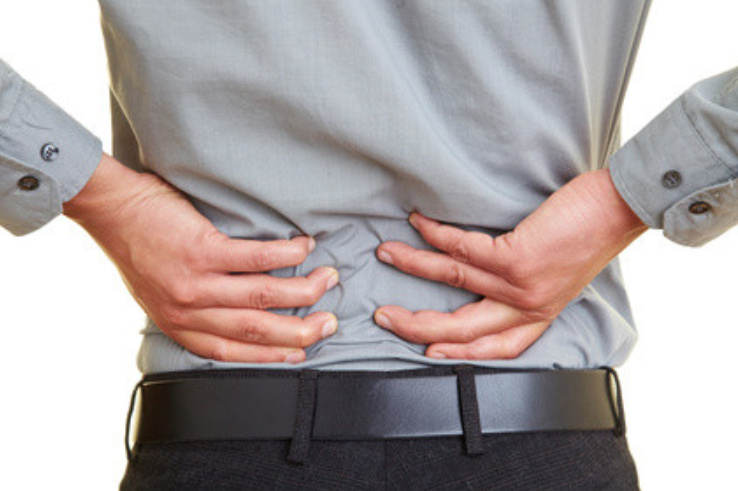
So, what useful tips do I have in mind when I talk about TLC? (and note – here I am thinking mainly of lower back strains, since they are the most common, but the basic principles apply to other injuries as well)
T is for Temperature
Traditionally the advice has been to apply ice to a recent injury in order to reduce the swelling and inflammation. Over the last few years however there has been a shift away from this, as those who study these things have realised that inflammation is actually part of the body trying to heal itself – the inflammatory process boosts the local circulation, which not only brings in fresh blood and nutrients but also takes away waste products from the injury site – and these waste products can themselves cause pain.
So, how does this translate into practical things that you can do to help yourself?
- A brief application of ice can be soothing and ease some of the pain, but for not more than a minute
- For more lasting benefit, go for alternating hot and cold: eg a bag of frozen peas wrapped up in tea towel tucked against your lower back, and then a hot water bottle in its cover. No more than a minute of each, say for 5 times eg Cold-Hot-Cold-Hot-Cold; and always start and finish with cold – this really helps to get the circulation going.
- If you do need pain relief for an acute injury then avoid anti-inflammatories such as aspirin or ibuprofen, and use paracetamol instead. The soluble form is the fastest acting.
- gentle local massage or stroking – again, this will help the circulation while soothing the painful area
L is for Lying Down (or at least being Languid)
in other words – resting! Controlled rest that is – so within each hour of 60 minutes, when an injury is very recent, rest for say 55 minutes and gentle movement for 5 minutes, then gradually shift the ratio of rest and activity to say 50:10, or 45:15; or go for more frequent changes with a 30-minute model eg 25:5, 20:10.
The idea of contrasting rest and movement is similar to the pattern of alternating ice and heat. The gentle movement for a few minutes helps the circulation and stops the area stiffening up too much, but too much movement may irritate the inflamed tissues more and may cause further damage.
Depending on where the injury is, these ideas can be modified, eg for a sprained wrist, keep it supported in a sling, and then do some slow gentle wrist rolling.
In today’s busy world it can be hard to give ourselves time to rest, to allow rest as a factor in repair and wellbeing, to move slowly – however, just think of an animal in the wild which has been injured, what does it do? It finds a quiet place in the shade to lie still, to allow its body to heal. There is nothing wrong in following that example of nature knowing what is needed.
C is for Comfort
Following on from this analogy of the wounded animal, what does your body feel comfortable with? This is not about cocooning ourselves to avoid any hint of stretch, rather to treat our bodies with the love and respect they deserve, and to gently explore what movements and stretches are possible within our Comfort Zone. There is also that quality of stretch which may feel a very slightly challenging to start with but is actually quite pleasant as we gently work through it to find a place of greater ease.
I am a firm believer in exercising within our comfort zone – if we push ourselves too hard, then tissues will only react and become more irritated, whereas if we exercise gently, with kindness, within what we can do, then what we can do will gently improve.
After all, tender loving care is about soothing and calming – and I hope these simple ideas will help you as you heal and mend.
As always, if in doubt about any of this, check with your GP or a local osteopath whether this advice is right for your circumstances.
If you live or work in or near Baldock in North Hertfordshire, or Bromley in South East London, and would like to have a chat about how osteopathy might be able to help you, then please contact me via email or call 07535 350 343 to discuss your conditions.